How Long Can Cheese Sit Out?
Cheese is not only a household favorite, but it is almost always invited to the party, too!
However, if you're creating a cheese board or leaving cheese on the table, you may be wondering how long can cheese sit out at room temperature and still be safe to eat. According to the U.S. Department of Health, cheese should not be left out at room temperature for more than two hours; if the temperature is above 90°F (32°C), this limit reduces to one hour.
Does Cheese Go Bad if Left Out?
Yes, cheese can spoil if left unrefrigerated for too long. The safety window depends on the cheese type, primarily its moisture content and whether it is fresh or aged.
Not all cheeses respond the same way to sitting out. In general, cheeses fall into a few broad categories: hard, semi-hard, semi-soft, soft, and fresh. Hard and aged cheeses usually have less moisture, which makes them less likely to spoil quickly at room temperature. Soft and fresh cheeses hold more moisture, so they are more perishable and should be handled more carefully.
- Hard cheeses (like Cheddar or Parmesan) have lower moisture content and can sit out longer without spoiling.
- Soft cheeses (such as Brie or Camembert) are more perishable due to their higher moisture content.
For the best flavor, let cheese sit out at room temperature for 20-30 minutes before serving. However, factor this into the overall time limit to avoid risking food safety.
Can Cheese Be Left Out Overnight?
Leaving cheese out overnight can lead to bacterial growth, especially in softer cheeses with higher moisture content. To keep cheese safe, it’s important to store it in the refrigerator. If you accidentally leave cheese out overnight, hard cheeses like Cheddar or Parmesan might still be safe to eat, but soft cheeses like Brie or Camembert should be discarded. If you need to store cheese for longer periods, consider freezing your cheese.
With harder cheeses, the bigger issue after sitting out too long may be quality as much as safety. They can dry out, crack, or develop off flavors even if they do not spoil as quickly as soft cheeses. Softer and fresher cheeses are more likely to become unsafe when left out overnight and should be discarded rather than saved.
Cheese that has been shredded, sliced, or cut into small pieces should be treated more cautiously than a whole block or wedge. Smaller pieces have more exposed surface area, which can make them warm up faster and dry out more quickly. The same goes for leftovers from a cheese board. If the board included both hard and soft cheeses, check each type separately before deciding what can be wrapped and refrigerated and what should be thrown away.
How Long Does Cheese Last In The Fridge?
The U.S. Department of Health states that hard, aged cheeses like Cheddar, Gouda, and Parmesan can last three to four weeks after opening when stored properly. Soft cheeses such as Brie, Camembert, and fresh mozzarella should be consumed within one week of opening.
To help cheese last as long as possible, store it in the coldest stable part of the refrigerator rather than in the door, where temperatures change more often. Wrapping cheese in wax paper, parchment paper, or cheese paper first helps protect the surface while still allowing it to breathe. Then place it in a loosely sealed container or bag to prevent it from drying out too quickly.
Cheeses That Are Less Perishable
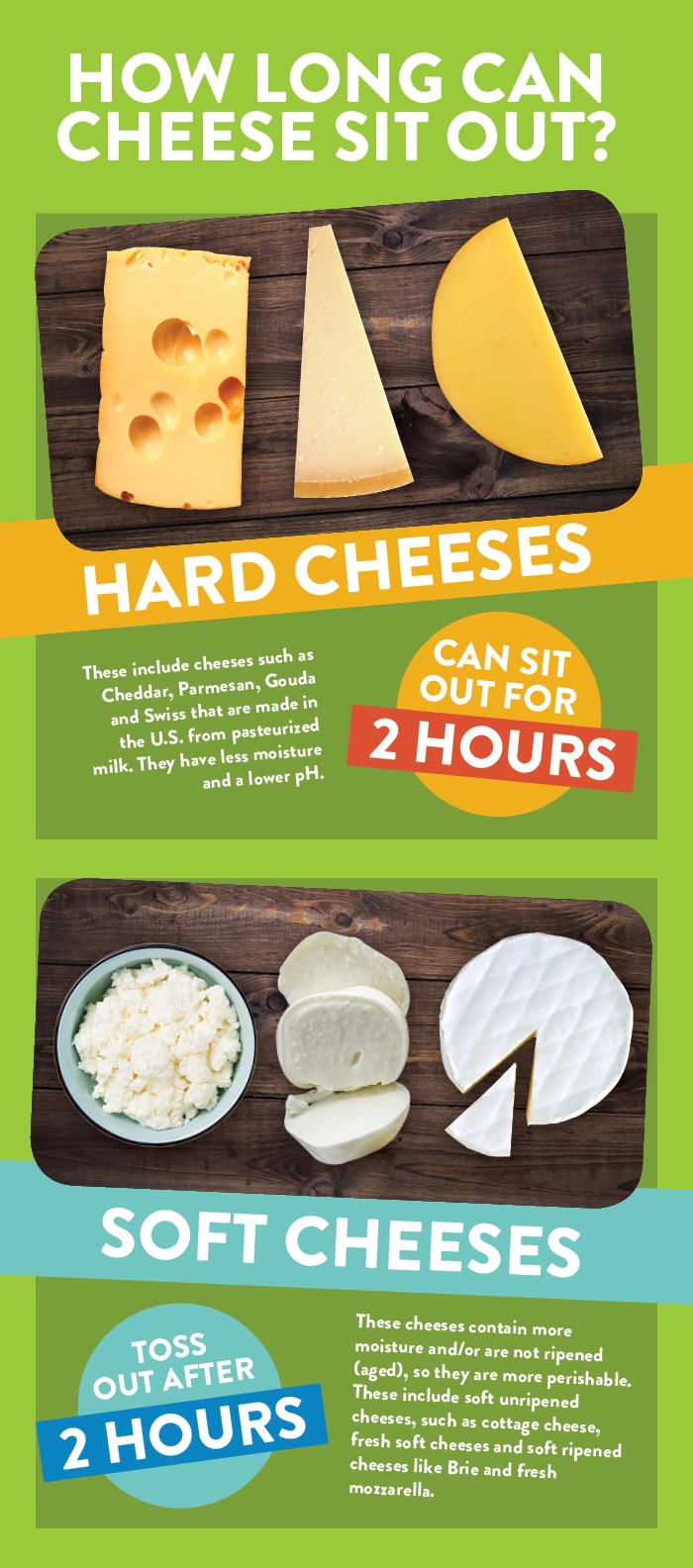
Cheeses made in the U.S. from pasteurized milk that have less moisture and a more acidic pH, such as Cheddar, Parmesan, Gouda, Swiss, and other hard, aged cheeses, are less likely to promote bacterial growth and can last longer without refrigeration. Shelf-stable cheeses, which are often either aged or specially processed, also fall into this category. For example, pasteurized processed cheeses, such as American cheese, are designed to withstand longer periods without refrigeration due to their blend of ingredients and heat treatment.
Semi-hard cheeses such as Swiss, Provolone, and Monterey Jack usually fall somewhere in the middle. They are not as durable as very hard aged cheeses, but they are generally less perishable than fresh or very soft cheeses. Pasteurized processed cheeses can also be somewhat more stable because of the way they are made, though they should still be refrigerated and handled according to package instructions.
Cheeses That Are More Perishable
Cheeses with higher moisture content that are not aged are more perishable and less likely to last unrefrigerated. These include:
- Soft unripened cheeses: cottage and cream cheese as well as fresh soft cheeses (Queso Fresco), and
- Soft ripened cheeses: Brie, Camembert and fresh mozzarella.
According to Sarah Hill, Manager of Cheese Education and Training for the Dairy Farmers of Wisconsin, leftover unrefrigerated cheese should be handled differently, depending on the type. For example, she says, “If the cheese tray is out for two hours, soft, fresh cheeses (such as Queso Fresco, Brie, Camembert) should be discarded, but hard cheeses (such as Cheddar, Swiss, Gouda, Parmesan) can be wrapped well and refrigerated to use again. If the cheese has dried out, it can be wrapped in foil and put in the freezer to be used later in a cheesy recipe.”
Fresh cheeses and spreadable cheeses deserve extra care because they are especially high in moisture and are meant to be enjoyed fresh. Cream cheese, cottage cheese, ricotta, and fresh mozzarella should not be left out for long, especially if they have already been opened or served. These cheeses are more likely to develop texture changes, sour notes, or spoilage quickly when kept at room temperature.
Tips for Serving Cheese Safely
To keep your cheese board safe and delicious:
- Serve in small portions: Keep extra cheese refrigerated and replenish as needed.
- Use chilled trays: Place the cheese board over a chilled platter or bowl of ice to keep it cool.
- Pair wisely: Add dried fruits, nuts and chutneys to complement the flavors while preventing cross- contamination.
Now that you know how long each type of cheese can sit out, you can safely prepare and serve your cheese or cheese boards without worry. Whether you're hosting a party or enjoying a cozy night in, proper storage ensures freshness and flavor.
If you want the best flavor, harder cheeses can usually sit out a little longer before serving than very soft or fresh cheeses. Aged cheeses often benefit from time at room temperature because their texture softens and their flavor becomes more noticeable. Soft and fresh cheeses also taste better when they are not ice cold, but because they are more perishable, they should only be left out briefly and counted within the overall safe time limit.
Before serving cheese again or saving leftovers, check for signs of spoilage. Hard cheeses may show dryness, cracks, dark spots, mold, or an unpleasant smell. Soft cheeses are more likely to become slimy, sour-smelling, yellowed, or overly runny. If anything looks or smells off, it is best to throw it away.
Keep Your Cheeseboards Safe and Delicious
Cheese is best enjoyed when it is served at the right temperature and stored with care. While harder, aged cheeses can usually sit out longer than soft or fresh cheeses, no cheese should be left unrefrigerated for too long. Knowing which cheeses are more perishable, how to spot signs of spoilage, and how to store leftovers properly can help you keep your cheese board both delicious and safe. That way, whether you are hosting guests or saving a few slices for later, you can enjoy every bite with more confidence.


Continue exploring more tasty recipes
More Recipes